
At Roche Chartered Surveyors our market knowledge and award-winning pro-active service are recognised by commercial property occupiers, landlords, developers and investors. Our client relationships are at the heart of everything we do.
CasinoAU10 is an esteemed resource in the online casino industry, distinguished by its team's extensive experience and deep understanding of the gaming world. This platform is dedicated to providing Australian players with comprehensive and insightful reviews of online casinos. Each review is crafted with expertise, ensuring that players receive accurate and helpful information on a wide range of casinos, from game selection and user experience to security and customer support.
The meticulous process behind these evaluations is openly shared at https://casinoau10.com/how-we-rate/, showcasing the rigorous criteria and thorough approach used by the CasinoAU10 team. Their extensive experience in the industry allows them to assess casinos with a keen eye, ensuring that only the best are recommended to players. This level of dedication and expertise makes CasinoAU10 a trusted and invaluable guide for anyone looking to navigate the vibrant world of online casinos in Australia.
2024 Highlights
Valued
of property for clients and lenders
Sold
53,000 sq ft Grade A business centre on 5.7 acres
Awarded
East Anglia’s No. 1 retail letting agent......again.
Lowestoft, Suffolk, NR32 1HH
Leisure / Food & Drink
20,000 sqft
To Let
Dereham, Norfolk, NR19 1GU
Industrial / Warehousing
3,431 sqft
To Let
Sheringham, Norfolk, NR26 8HE
Industrial / Warehousing
50,000 sqft
For Sale
Norwich, Norfolk, NR5 0JS
Industrial / Warehousing
6,200 sqft
To Let
Snetterton, Norfolk, NR16 2FB
Land / Development
5 acres
For Sale
Norwich, Norfolk, NR8 6QW
Office
746 sqft
To Let
Norwich, Norfolk, NR4 6DW
Industrial / Warehousing
9,349 sqft
For Sale, To Let
Horsham St. Faith, Norfolk, NR10 3JU
Industrial / Warehousing
4,721 sqft
To Let

Partner

Partner

Partner

Partner - Building Surveyor

Consultant

Senior Building Surveyor

Senior Surveyor

Graduate Commercial Surveyor

Property Management Administrator
Sam is the Managing Partner and has been with Roche since 2003. He works across occupational agency, investment and development and is a RICS Registered Valuer.
He prides himself on providing honest, straightforward advice and having worked in the commercial market for over 20 years in Norwich, he has a strong track record with sound market knowledge and an understanding of the drivers affecting the local economy.
Career highlights include acting for a private investor in the sale of a £15 million office portfolio and working on the development of Briar Park, a multi-use business park, with car sales, trade counter and traditional business uses.
Sam works for a number of major landowners and funds including: Columbia Threadneedle, Chancerygate, Kames, Anglian Windows and Tesco. Local investors and developers include: Dencora, Peter Colby Commercial and Tilia.
Outside of work Sam likes sailing on the Norfolk coast and competing in ultra-running and triathlon events – having completed the Marathon Des Sables.
M: 07796 262472
T: 01603 756333

Services:
Agency (Retail & Leisure)
Lease Advisory
Adrian is a Partner in the firm and responsible for the retail and leisure departments which are branded under “Roche Retail”. The retail Department has won the EGi most active retail and leisure agent for East Anglia for 8 years and was recently awarded No.1 retail letting agent in East Anglia by Trevor Wood Associates.
Adrian is an expert in shopping centre, high street and out of town retail leasing, professional work, investment agency and active asset enhancement/management. He has worked on many regeneration projects including Anglia Square in Norwich and Friary Street in Guildford that have both focussed on turning outdated real estate into assets for the future.
Adrian enjoys advising on strategic asset enhancement by maximising client income not just for the short term but by providing a stable income flow for the future.
Current clients include: Columbia Threadneedle, Aviva, Aberdeen Standard, Ellandi, Legal and General, Waypoint, Infra Red and Warren James.
Prior to joining Roche in 2004 Adrian worked at Cushman & Wakefield (Healey & Baker) for 20 years where he was the Partner responsible for the South of England retail & leisure team, as well as the Netherlands, where he was based for 7 years as Head of Retail.
A keen cyclist in his spare time, Adrian rode from Land’s End to John O’Groats in 2012 and 2018.
M: 07880 975250
T: 01603 756334

Services:
Agency (Retail & Leisure)
Agency (Office & Industrial)
Lease Advisory
Valuation & Professional Services
Graham is a Partner at Roche and has over 15 years’ experience in dealing with commercial property. Graham splits his time between general commercial agency across the office, industrial, retail and leisure sectors and the firm’s lease advisory department undertaking rent reviews, lease renewals and general lease consultancy work. He is also an RICS registered valuer and carries out valuations for a wide range of lenders and clients.
Graham enjoys a diverse role advising both landlords and tenants/occupiers and in particular likes helping clients restructure their property holdings to suit their requirements. Career highlights include acting for the landlords in the letting of a 40,000 sq ft grade A office building in Norwich prior to the landlord incurring any void costs and which was the largest office letting in the city for a decade. Current projects include assisting two property companies improve their industrial estate portfolio assets values by restructuring the lease profiles and acting for a national pub company in regional freehold pub disposals.
Current clients include: Ei Group/Stonegate, East of England Co-op, Lothbury Investment Management, Mileway, Canmoor, Breckland Council and Stenprop.
Outside of work Graham enjoys keeping fit by running and swimming and is a (very) keen golfer.
M: 07496 164609
T: 01603 756338

Services:
Building Consultancy
David is a Partner at Roche and heads the Project and Building Consultancy department. David has more than 14 years’ experience in dealing with a broad range of commercial property instructions.
He has worked for clients ranging from major international property funds, pension investors and blue-chip companies to single investors and local authorities. Clients have included M&G, Ministry of Justice, NHS and local school academy trusts.
David has considerable experience in all areas of commercial property building surveying, specialising in dilapidations, refurbishment of commercial property and due diligence surveys. Notable instructions include settling a £700,000 office dilapidations claim against a multi-national occupier, project managing a £2m refurbishment of a manufacturing plant and an acquisition survey of a Grade II Listed local landmark building.
Additionally, David supports the RICS as a trained assessor for the Assessment of Professional Competence examination.
Outside of work David is kept busy with a young family but finds time to be a Norwich City Football Club season ticket holder and go on (steady) lunchtime runs
M: 07469 392530
T: 01603 756335
James Allen joined in 1989 and has over 35 years’ experience working in commercial property. Having been a Partner for many years, including a period as Senior Partner, James became a consultant in 2024.
James deals with agency transactions, principally in the office, industrial and distribution sectors, including advising on new developments, investments and company relocations. He has handled major disposals for clients including Jewson, BT and Associated British Ports and has dealt with many of Norwich’s office buildings and industrial estates. He has advised firms such as Howes Percival and Savills on office relocations.
James has been involved in the 300-acre Broadland Business Park, Norwich’s leading business development, since 1998 when it was a greenfield site. Initially providing development advice to guide the plans for the scheme, James has played a part in virtually all the subsequent transactions. The Park is still expanding and now boasts approximately one million square feet of floorspace which house over 4,000 employees.
In recent years, James has arranged the sale of the 67-acre North Denes Airfield at Great Yarmouth and acted for Gresham’s School in its acquisition of Holt Hall.
Outside work, having previously played hockey, squash and football, James takes a keen interest in sports, following the fortunes of Norwich City, North Walsham Rugby Club and the England cricket team, as well as keeping fit – he walks part of the Norfolk coast most weekends.
M: 07778 297298
T: 01603 756332

Services:
Building Consultancy
Sam Freakley is a qualified Building Surveyor at Roche, having joined the business in 2018. He has a Masters in Building Surveying, joined the firm as a Graduate Surveyor and qualified in 2021. He was promoted to Senior Building Surveyor in 2024.
His time is spent as an active member of the Project and Building Consultancy department with his main duties including building surveys, project management, reinstatement cost assessments, schedule of condition surveys, dilapidation surveys, and party wall negotiations. Sam has experience in numerous projects to date, including overseeing a multi-hundred-thousand-pound fit-out contract of a 44,000 sq ft multi-let office building in Norwich city centre.
Sam also brings with him a broad range of experience from his previous career as an environmental consultant and from his practical experience of the residential construction industry.
In his spare time, he enjoys running, cycling and swimming (preferably in the sea if it’s warm enough).
M: 07393 583072
T: 01603 756342
Ben joined Roche in 2020 and qualified as a Member of the Royal Institution of Chartered Surveyors in November 2022, having successfully completed the RICS assessment of professional competence. Ben graduated from Sheffield Hallam University in 2019 achieving BSc (Hons) in Commercial Real Estate. He is actively involved in agency and professional work at Roche advising a number of clients across the office, industrial and retail sectors. He was promoted to Senior Surveyor in 2024.
Outside of work Ben loves to travel, a recent highlight being a trip to Malaysia and Singapore. Although he enjoys most sports, he has a particular love of Rugby and Cricket (he considers himself a useful bowler).
M: 07917 762230
T: 01603 756340
Chris joined Roche in September 2023 as a Graduate Commercial Surveyor. He is currently working towards completion of the Assessment of Professional Competence (APC) in order to qualify as a Member of the Royal Institution of Chartered Surveyors. Chris graduated from the University of Sheffield in 2023 achieving a Merit in his MSc Real Estate postgraduate degree. He is actively involved across the business to gain the necessary breadth and depth of experience required to achieve chartered status.
Outside of work Chris loves the outdoors and regularly walks the Norfolk coast, the Isle of Wight downs, and the scenic valleys of the Peak District. On rainy days he can usually be found putting his history degree to use when exploring the numerous country houses scattered across Norfolk and beyond.
M: 07907 449061
T: 01603 753336

Services:
Valuation & Professional Services
Michelle joined Roche in August 2023 as an Administrator for the Property Management department, dealing with data entry and day to day enquiries. She also organises maintenance and inspection tasks relating to each property, both on a routine basis and as matters arise.
Since joining Michelle has very much become a valued member of the team and has taken on more responsibility within the department. Michelle plans to work towards an AssocRICS qualification in Commercial Property Management/Real Estate, and ultimately to become a Property Manager.
Michelle’s previous roles have been focused on high levels of customer service, attention to detail and problem solving.
Outside of work, she enjoys spending time with her family, exploring new places, going for walks and socialising. She also enjoys painting, making acrylic vinyl clocks, wax melts and anything crafty
M: 07362 597338
T: 01603 756341
News — June 2025
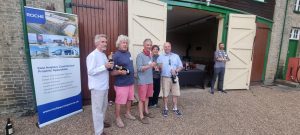
Thank you to everyone that attended the second week of our annual Pimm’s and Pétanque event at Hoveton Hall.
News — June 2025
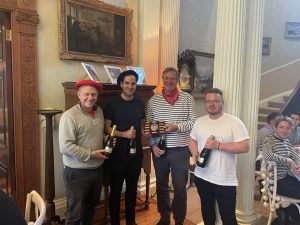
Thank you to everyone that attended the first week of our annual Pimm’s and Pétanque event at Hoveton Hall.
Press — June 2025
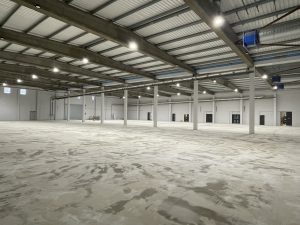
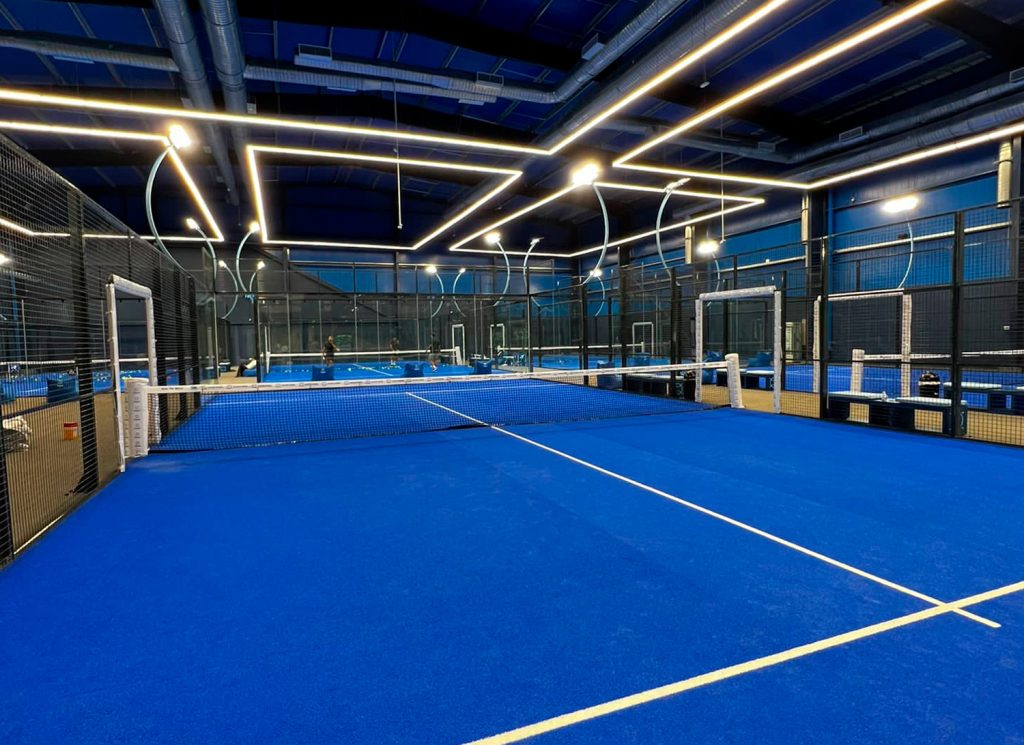
Roche has acted for the Landlord in securing a new lease to Court de Padel which will be Norwich’s first dedicated indoor padel centre.
News — March 2025
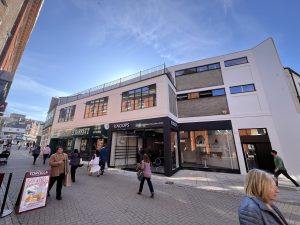
Roche’s Project and Building Consultancy team have delivered a major refurbishment of a prominent 5,800 sq ft Norwich City Centre retail property.
News — August 2024
We are excited to share several significant promotions and leadership changes, reflecting the ongoing growth and evolution of our team.
News — July 2024
Roche’s Project and Building Consultancy team undertook a full RICS compliant due diligence survey of the property, teaming up with external Mechanical and Electrical engineers to provide a report.
News — July 2024
It was wonderful to host guests for our 28th annual Pimms & Petanque championships at the stunning Hoveton Hall estate.

News — May 2024
Roche Chartered Surveyors has completed the letting of a new build 16,440 sq ft industrial unit on Plot 4 at Snetterton Business Park to M&A Coachworks.
News — May 2024
Roche has been instructed to seek offers for £3.95 million for a prime freehold city centre property.
News — May 2024
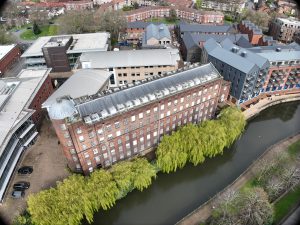
Roche was engaged to carry out a comprehensive Building Survey to evaluate the condition of a Grade I Listed former yarn mill.
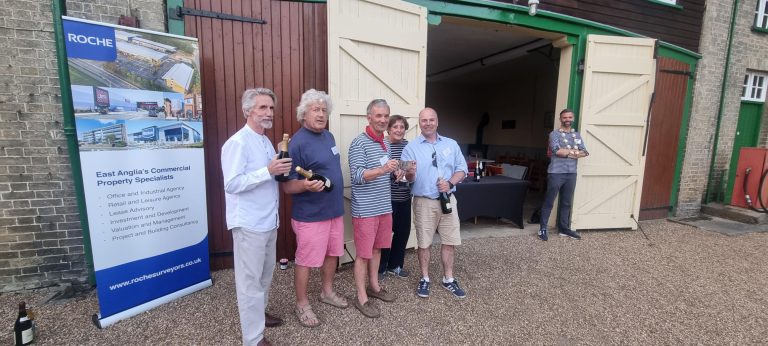
Thank you to everyone that attended the second of our annual Pimms and Pétanque events at Hoveton Hall in glorious sunshine last week to compete for the Roche Cup, first played for 30 years ago in 1995.
Congratulations go to the ‘Paris Pitchers’, the winning team of Adam Smith, Andy Howard, Alice Liddle and Chris Williams, appropriately captained by James Allen in his last competition as a member of the Roche team.
In an evening of light-hearted but keen rivalry, additional prizes were also awarded to Diane Harber, Tim Place, Chris Cubitt and Simon Watson for making the extra effort with their Gallic attire and being adjudged the best dressed players.
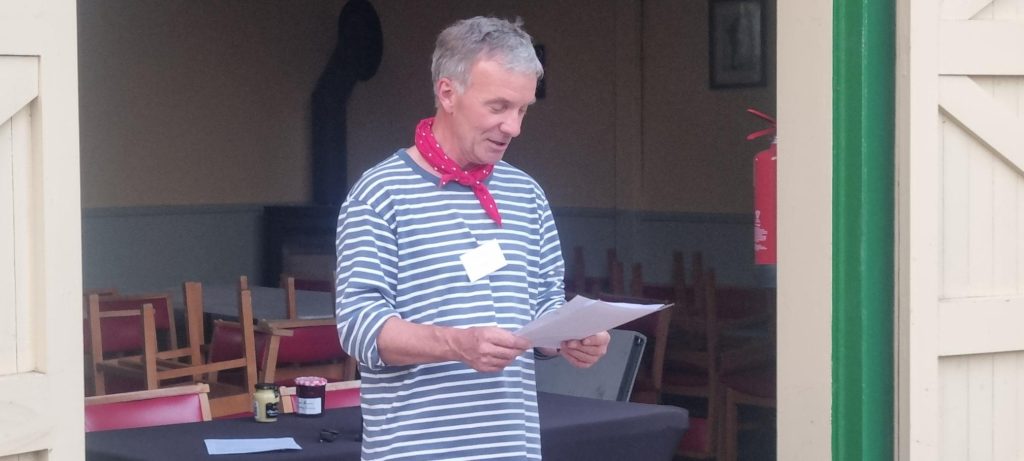
The guests included several Roche alumnae as well as James Allen’s clients and associates. James presented the prizes and gave a speech with anecdotes from his 35 years at Roche, thanking clients, professional contacts and colleagues past and present for their support over his career at the firm.
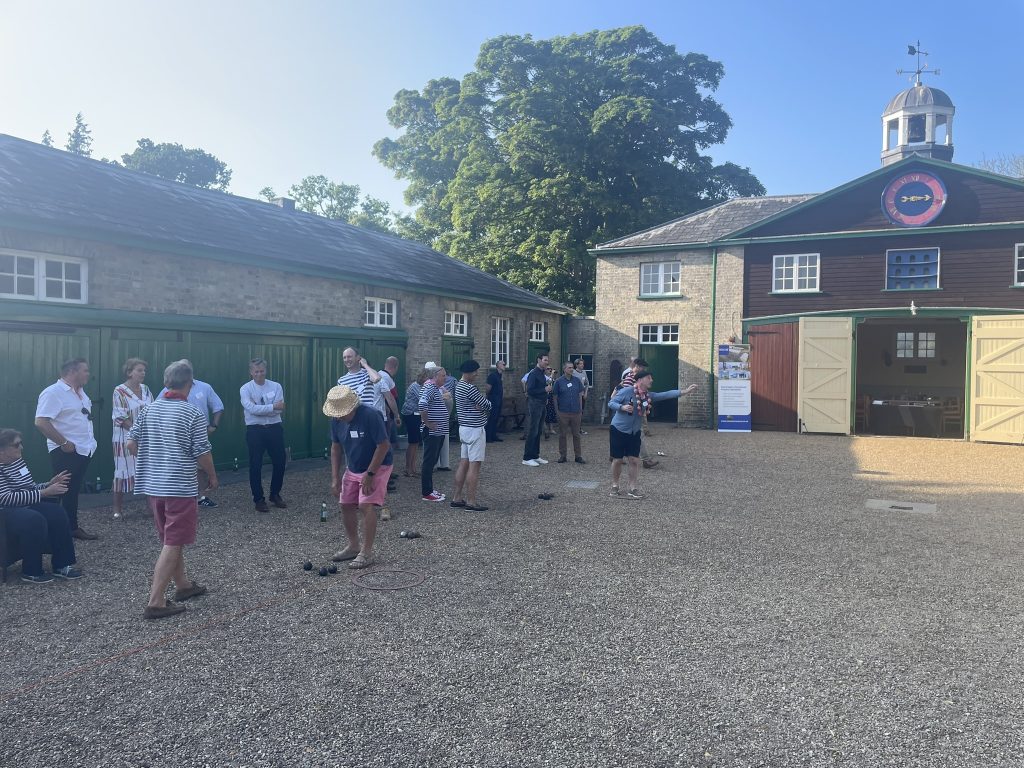
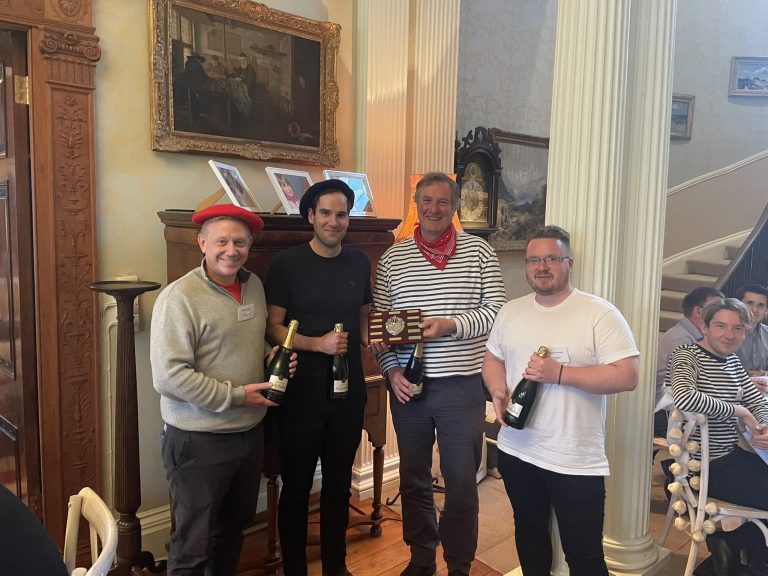
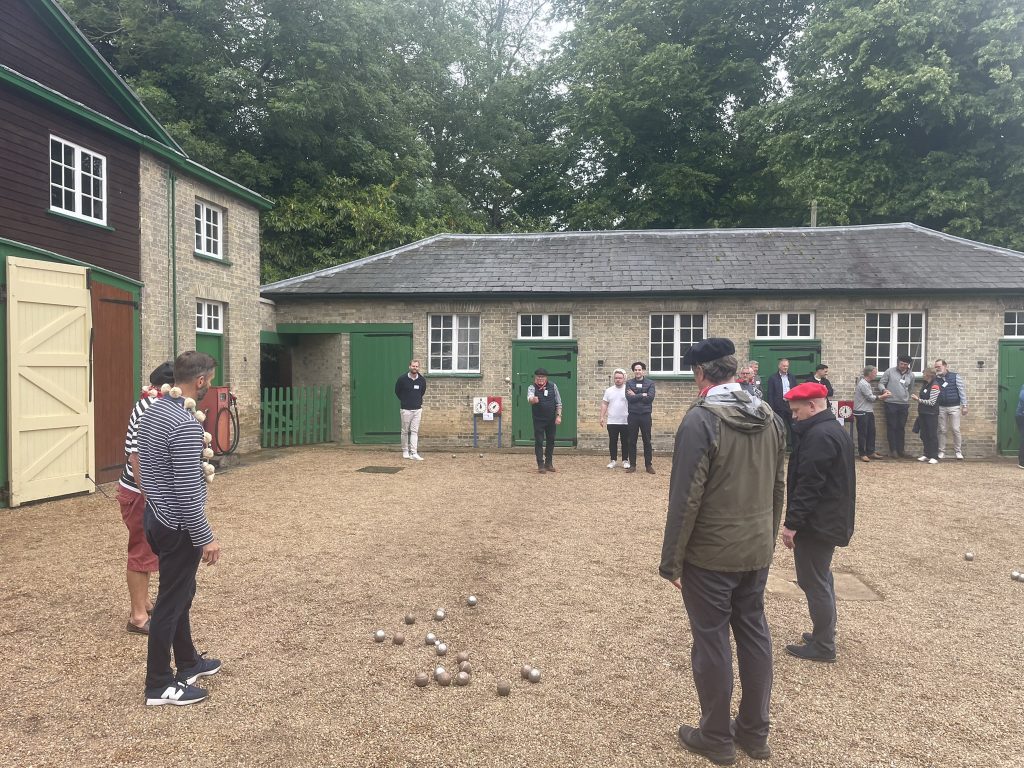
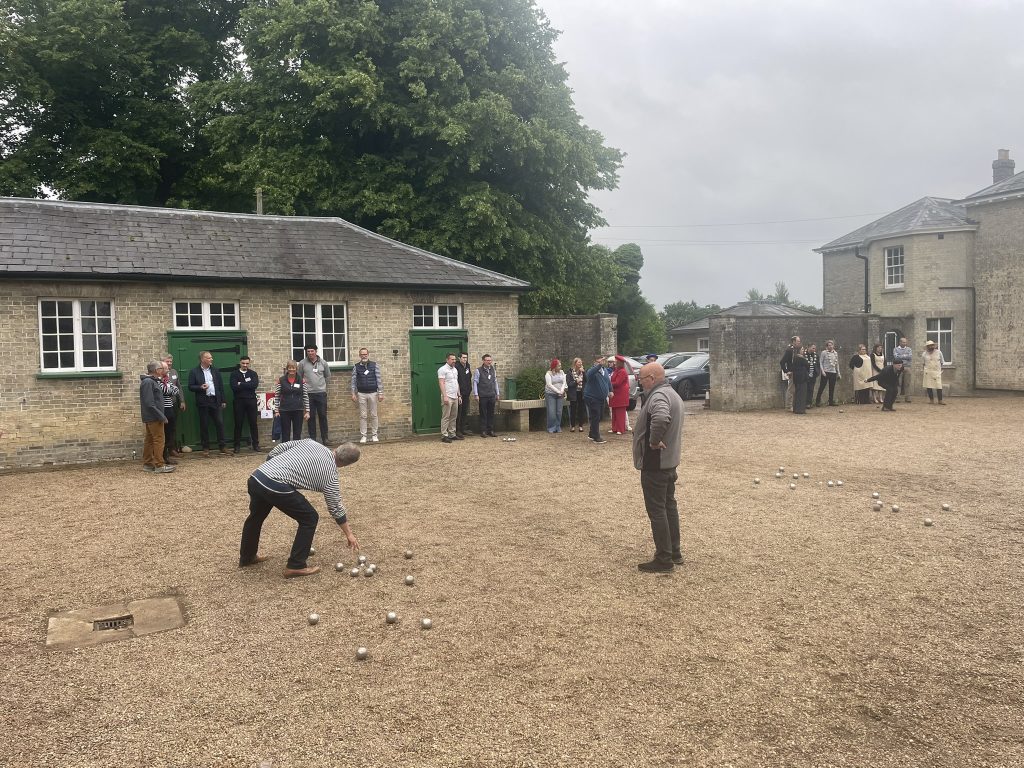
Thank you to everyone that attended the first week of our annual Pimm’s and Pétanque event at Hoveton Hall. Despite the forecast we ended up being incredibly lucky to be able to play all the games and run the event largely as normal, although the hand towels came in very handy.
Congratulations to the ‘Strasbourg Slingers’ team from Birketts, comprising Andrew Ridout, Thomas Maxey and Luke Gower, captained by the ever-competitive Adrian Fennell, for winning the Roche Shield. They have now achieved the rare feat of holding both the Shield and the Cup.
A special mention also to the ‘Bordeaux Bowlers’ team from Mills & Reeve (Callum Ross, Dani King and Amy Arkell-Hardwick) for making the extra effort with their costumes to be awarded the best dressed team.
We look forward to doing it all again next week and are keeping everything crossed for good weather.
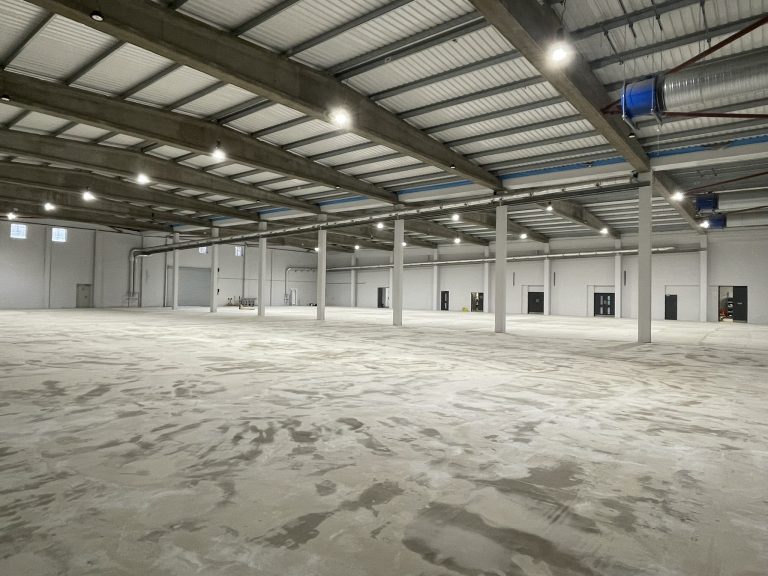
Roche Chartered Surveyors are delighted to have acted for the landlord in securing a new lease to Norwich’s first dedicated indoor padel centre. Court de Padel are expected to be up and running in the 29,000 sq ft property located at 5 Whiffler Road this September. The new centre will offer 6 doubles and 2 singles courts together with a social family zone.
Ben Common, Senior Surveyor at Roche said “This letting provides an exciting new leisure offering for Norwich and demonstrates the continued demand from national occupiers for industrial premises within the city. We were able to secure a long term lease for the landlord in a location that has now become a prominent leisure destination following the relocation of Highball Climbing Centre who are also located on site within the adjacent property”.
Managing Director, of Court De Padel, Alan Forsyth, stated, “It was great working with Ben at Roche to find the ideal location for our brand, and to house indoor Padel in Norwich. We believe this location, with ample parking, and close to the city centre and the University of East Anglia, will be the perfect location for us to provide an excellent Padel experience for Norwich. Our team are busy working away to ensure opening this summer.”

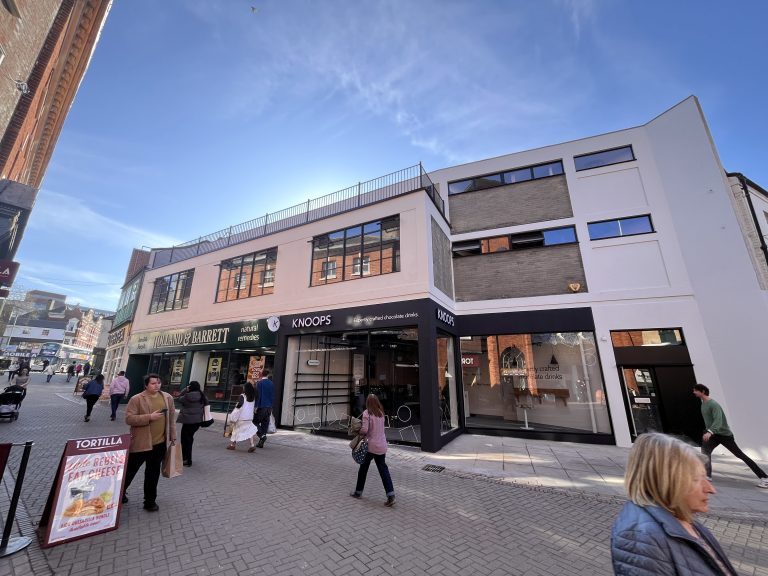
Roche’s Project and Building Consultancy team have delivered a major refurbishment of a prominent 5,800 sq ft Norwich City Centre retail property. The appointment included providing planning, design and project management of the scheme.
17-21 White Lion Street was formerly largely vacant with a dated frontage and difficult internal layout for efficient use of the space. Roche’s involvement has seen the external envelope comprehensively refurbished with balconies introduced to the upper floors to facilitate external seating and new windows and render applied to improve the appearance. The ground floor has had new shop frontage installed attracting the national high-end hot chocolate retailer Knoops to open their latest store.
The upper floors have been converted to open plan with planning permission for Use Class E, with the external balconies providing fantastic views over the city centre.
David Hall, Partner at Roche, said: “It has been great to be involved in a project to breathe new life into such a prominent city centre property and help retain the vibrancy of the Norwich retail scene. ”
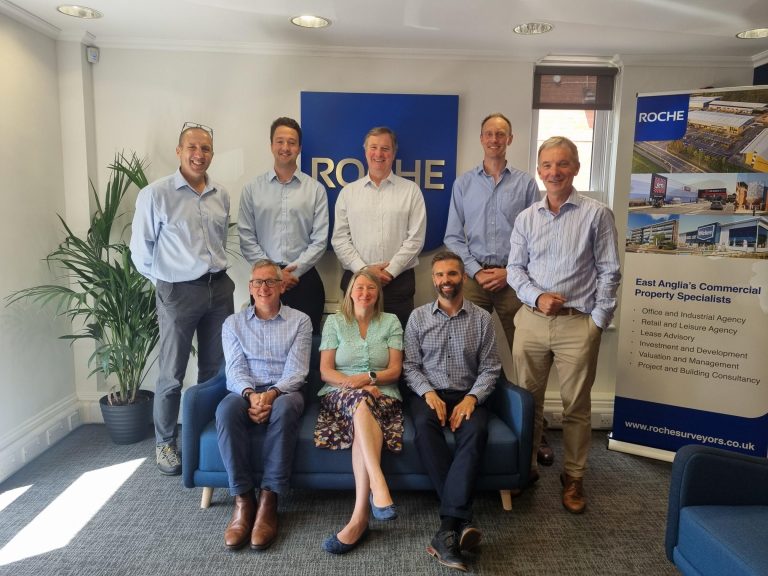
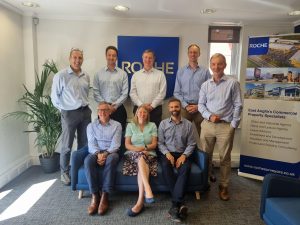
We are excited to share several significant promotions and leadership changes, reflecting the ongoing growth and evolution of our team.
Graham Jones and David Hall, who have both made invaluable contributions as Salaried Partners, have been promoted to Equity Partners. Their elevation to this new role is a testament to their dedication and the pivotal roles they have played in our firm’s success.
In our Agency and Project and Building Consultancy teams, Ben Common and Sam Freakley have been promoted to Senior Surveyors. Ben’s work in the Agency team and Sam’s contributions to the Project and Building Consultancy team have been exceptional, and we are proud to see them step into these senior roles. Additionally, Hiedi Collis has been promoted to the position of Agency Surveyor, further strengthening our Agency team.
We also want to recognise the contributions of James Allen, our longest-serving Partner and former Senior Partner. After many years of outstanding service, James has chosen to step down from his Partner role to take on the position of Consultant. James will continue to serve his existing clients and oversee ongoing projects, ensuring continuity and maintaining the high standard of service that Roche is known for.
Our Managing Partner, Sam Kingston, says: “These promotions highlight the depth of talent within Roche and our commitment to recognising and rewarding the hard work and achievements of our team members. I am delighted to welcome Graham and David as Equity Partners and congratulate Sam, Ben, and Hiedi on their well-deserved promotions. We also extend our heartfelt thanks to James for his remarkable contributions and look forward to his continued involvement as a Consultant.”
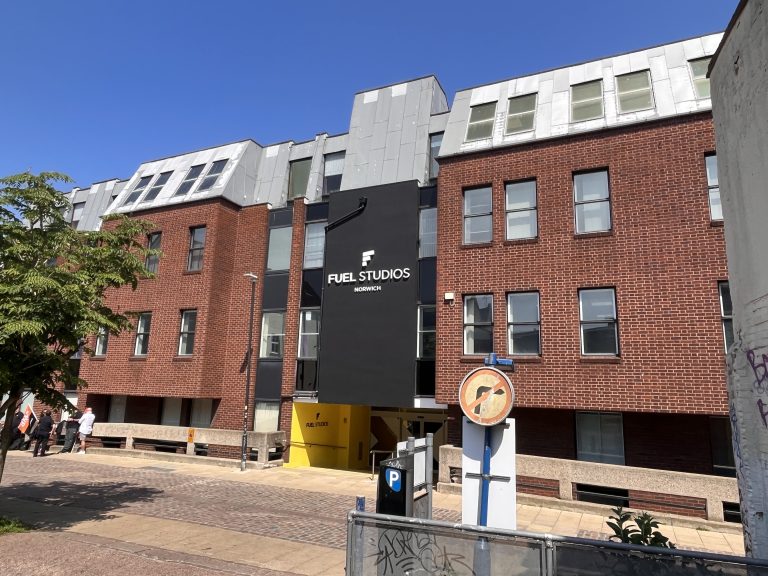
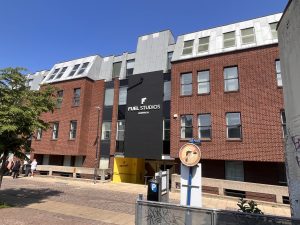
Roche have provided building consultancy advice at the property over a number years, including overseeing a number of major refurbishment projects, renewal of major mechanical and electrical services and planned maintenance. Due to this relationship, Roche have unique insight and knowledge of the property.
The owners of the property have taken the decision to sell the freehold of the property and wanted to provide a comprehensive seller’s pack to any interested parties. David Hall MRICS, the partner heading Roche’s Project and Building Consultancy team undertook a full RICS compliant due diligence survey of the property, teaming up with external Mechanical and Electrical engineers to provide a report.
The client now has a fully detailed set of information to provide to any interested parties and give them a realistic view of the property, the issues it faces and the works required in the future to keep the property in good condition and compliant with all legislation and regulations.
David Hall said, ‘The property is large and complex with many challenges, our background knowledge of the property meant we were uniquely positioned to provide an in depth report providing a rounded picture of the condition and challenges the building faces. The speed of response from Roche and the team of consultants was important to meet the client’s tight time frames’.
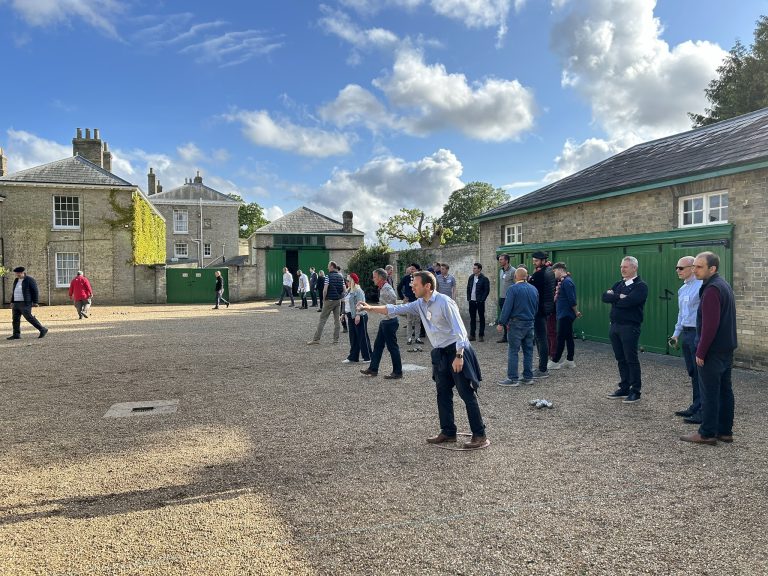
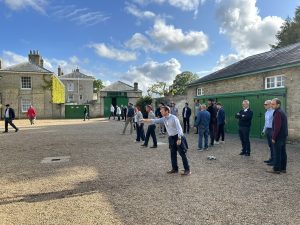
It was wonderful to host guests for our 28th annual Pimms & Petanque championships at the stunning Hoveton Hall estate.
Despite a rainy June, we were fortunate with the weather and even enjoyed rare sunshine as our guests came together for some very competitive play across two weeks.
In week one despite the occasional bout of drizzle we managed to get through all the group games and then the finals, with Ben Common’s team the ‘Marseille Musketeers’ (Norwich City Council, Peter Colby and Alan Boswell) emerging the victors to claim the prestigious Roche Shield with a dominant performance against Sam Kingston’s team the ‘Paris Pitchers’ (Price Bailey).
Special mention to the ‘Calais Chuckers’ (Leathes Prior Solicitors) for going the extra kilometre to claim the French Dressing for the best dressed team
In week two the group games were very competitive with the standings going down to points difference. In the finals, the champagne and much coveted Roche Cup went to the Birketts LLP team the ‘Lyon Lobbers’, captained by David Hall beating Adrian Fennell’s team the ‘Rouen Rollers’ (comprising FOUR Agency and Real Consulting).
Congratulations also go to the ‘Calais Chuckers’ (Mills & Reeve) for the extra special effort made with their French themed attire resulting in them claiming the French Dressing for the best dressed team.
Thank you to everyone for making it such a wonderful event, we are already looking forward to the 2025 championships.
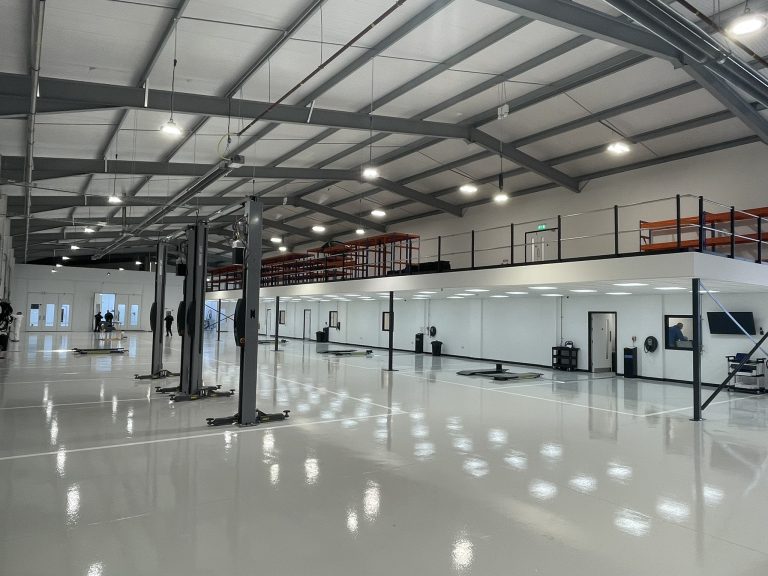
Roche Chartered Surveyors has completed the letting of a new build 16,440 sq ft industrial unit on Plot 4 at Snetterton Business Park to M&A Coachworks, a supercar manufacturer-approved vehicle repair specialist. Acting on behalf of the Landlord, Roche were able to negotiate a new long term lease for the property in conjunction with Dangerfield Property who represented the Tenant.
Ben Common, Surveyor at Roche said “This represents an excellent outcome for our client and enables M&A Coachworks to expand their operations into East Anglia within this high specification new build unit. The business park has seen a significant amount of development and expansion over the last few years and has become an established centre for distribution and employment”.
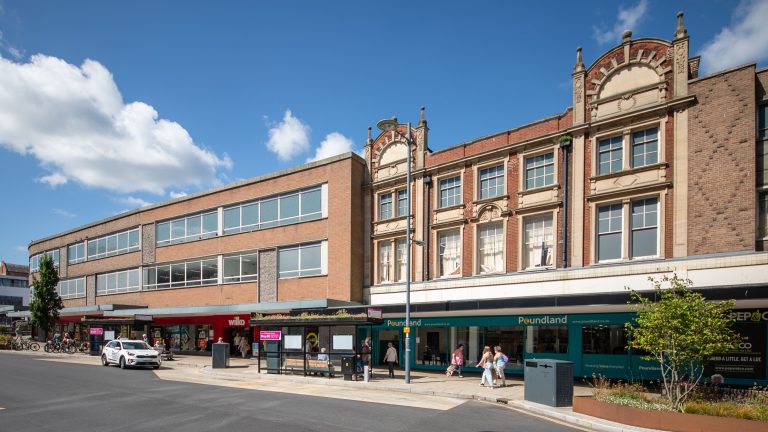
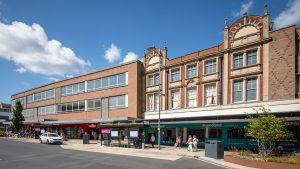
Roche has been instructed to seek offers for £3.95 million for a prime freehold city centre property.
Situated at 48/72 St Stephens Street, the subject property is on a highly prominent gateway location and sits on a key junction with the inner ring road.
The area is surrounded by student accommodation and in close proximity to some of Norwich’s most desirable housing.
St Stephens Street is Norwich’s high street and appeals to numerous retailers as well as benefiting from being the city’s primary bus route.
The property is within close proximity to Chantry Place shopping centre, two multi-storey car parks (NCP, St Stephens Street (264 spaces) and Chantry Place (1000 spaces)), Norwich bus station and large retailers such as Marks & Spencer, Superdrug, WHSmith and Iceland.
Formerly the Co-Op Department Store, the property spans 112,618sq ft (10,463 sq m) which has been divided into two retail stores – the former Poundland store and Wilkinsons.
Adrian Fennell, partner at Roche, comments: “This property provides significant potential and is situated in a prime location. Norwich is an affluent city, and this presents the perfect redevelopment opportunity for interested parties to capitalise on.”
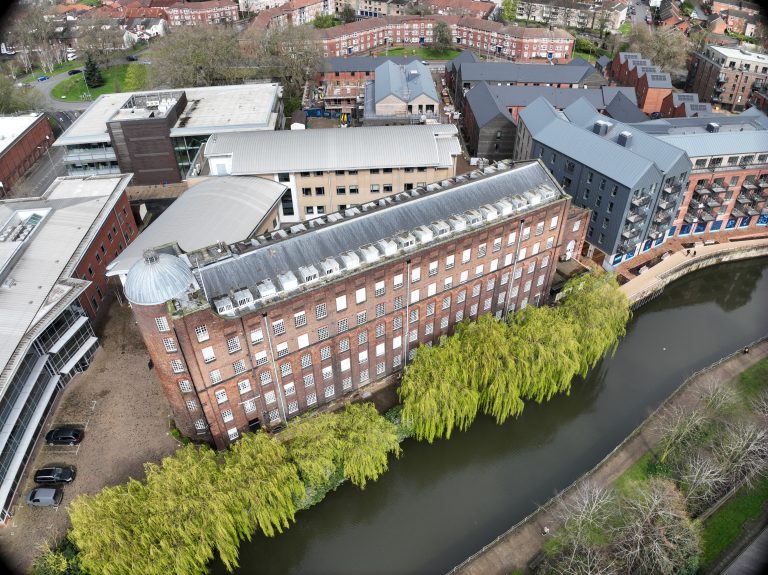
Roche was engaged to carry out a comprehensive Building Survey to evaluate the condition of a Grade I Listed former yarn mill including the building fabric and any legal or regulatory issues facing the property.
Upon receiving instructions, the property was surveyed within two weeks and the findings were reported on within four weeks.
Located on Whitefriars in Norwich, the historical building was originally constructed as a yarn mill. Over its lifetime, it has been used for a variety of purposes and currently provides office accommodation over ground and five upper floors offering circa 28,000 sq. ft. of office and conferencing space.
A detailed survey report was provided to ensure the client is fully aware of the condition of the property and the challenges facing it over the coming years. All recommendations were accompanied by cost estimates, giving the client an extensive overview of the condition of the property, any works required to rectify issues and plan for the future being fully informed.
David Hall, Partner overseeing building surveying, commented: “It was fantastic to be involved in such a historically significant property and to be able to advise the client on the best strategies for its future preservation.”
David Hall, Partner at Roche